How long do children need to sleep?
How Long Do Children Really Need to Sleep? (And Why It Matters More Than You Think!)
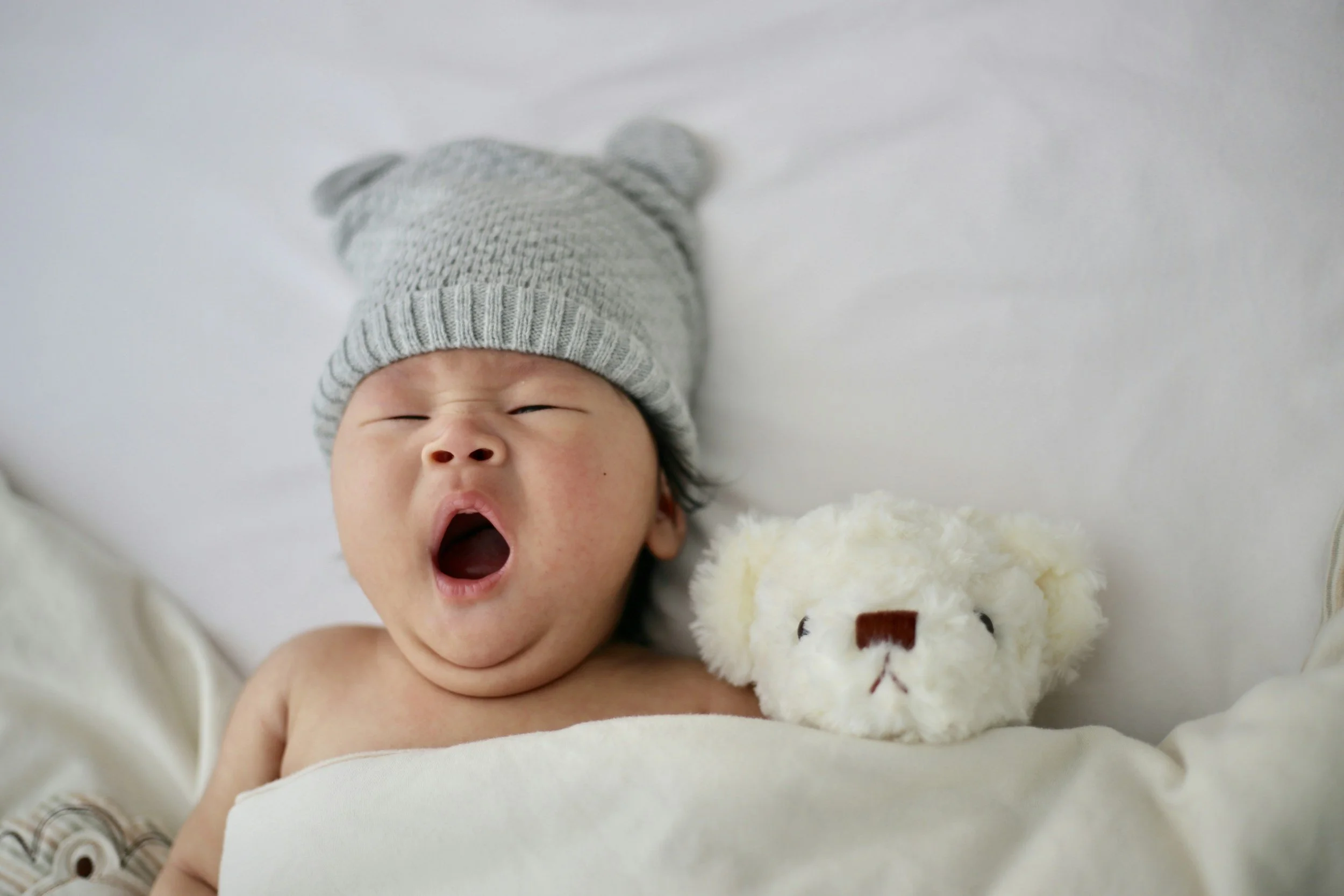
If you’ve ever wondered whether your child is getting enough sleep, you’re not alone. Sleep is one of the most common concerns parents have — and for good reason. Children grow, learn, regulate emotions, and strengthen their immune systems while they snooze. But how much sleep is actually recommended at each age?
Recommended Sleeping Guidelines by Paediatricians
For children under 1 year old, the American Academy of Sleep Medicine and the National Sleep Foundation recommend 12 to 16 hours per 24 hours (including naps) for infants aged 4 to 12 months. For infants younger than 4 months, there is significant variability, but typical sleep duration ranges from 14 to 17 hours per 24 hours, with wide normal variation and insufficient evidence to specify an exact recommended amount for this age group (1,2,3).
For children older than 1 year, the recommendations are as follows:
1 to 2 years: 11 to 14 hours per 24 hours (including naps)
3 to 5 years: 10 to 13 hours per 24 hours (including naps)
6 to 12 years: 9 to 12 hours per 24 hours
13 to 18 years: 8 to 10 hours per 24 hours[1-4]
These recommendations are supported by the American Academy of Sleep Medicine, the American Academy of Pediatrics, and the National Sleep Foundation, and are associated with improved physical, cognitive, and emotional health outcomes. Sleep needs decrease with age, and regular bedtime routines and sleep-promoting environments are advised to help children achieve these targets.[2-4]. Think of these as healthy ranges rather than rigid rules. Just like adults, every child is a little different — but consistently falling far below these numbers can lead to crankiness, behavior struggles, and difficulty concentrating.
Why Kids Need So Much Sleep
Children aren’t just resting — their brains and bodies are incredibly busy while they sleep. During deep sleep, growth hormones peak. Memory pathways are strengthened. Emotional “reset buttons” get pressed. When it comes to REM sleep, babies spend about 50% of their sleep in REM (dream sleep) compared to about 25% time in REM sleep for adults. Their brains are literally building new connections at lightning speed — dreaming might be part of the construction process!
Time in REM sleep gradually decreases with age. Polysomnographic and behavioral studies consistently show that REM sleep (also termed "active sleep" in infancy) occupies about half of total sleep time in healthy term infants during the first months of life.[5-8] This high percentage is thought to support critical neurodevelopmental processes, including synaptic plasticity and brain maturation.[5][8]
The sleep cycle in infants is shorter than in adults, typically around 50 minutes, with REM sleep predominating in the early part of the night.[9] As infants mature, the proportion of REM sleep decreases, reaching adult levels of approximately 20–25% by adolescence.[5-26]
And here’s another fun tidbit: exposure to morning daylight helps set the body clock. So opening the curtains at breakfast isn’t just cheerful — it’s science-backed!
References
1.Common Sleep Disorders in Children. American Family Physician. 2022. Deshpande P, Salcedo B, Haq C.
2. Short Sleep Duration Among Infants, Children, and Adolescents Aged 4 Months-17 Years - United States, 2016-2018. MMWR. Morbidity and Mortality Weekly Report. 2021. Wheaton AG, Claussen AH.
3. The Role of the Pediatrician in the Promotion of Healthy, Active Living. Pediatrics. 2024. Muth ND, Bolling C, Hannon T, Sharifi M.Guideline
4. Insomnia, Parasomnias, and Narcolepsy in Children: Clinical Features, Diagnosis, and Management. The Lancet. Neurology. 2016. Maski K, Owens JA.
5. Rapid Eye Movement Sleep During Early Life: A Comprehensive Narrative Review. International Journal of Environmental Research and Public Health. 2022. Chen HL, Gao JX, Chen YN, et al.
6. The Ontogeny of Mammalian Sleep: A Reappraisal of Alternative Hypotheses. Journal of Sleep Research. 2003. Frank MG, Heller HC.
7. Anatomical Correlates of Rapid Eye Movement Sleep-Dependent Plasticity in the Developing Cortex. Sleep. 2018. Renouard L, Bridi MCD, Coleman T, Arckens L, Frank MG.
8. English Translation of the First Study Reporting Cyclical Periods of Increased Respiration and Eye and Body Motility During Sleep in Infants in 1926, With Commentary. Sleep. 2024. Denisova K.